
Scars on the Wall
After 25 years of navigating, they pile up and point the way

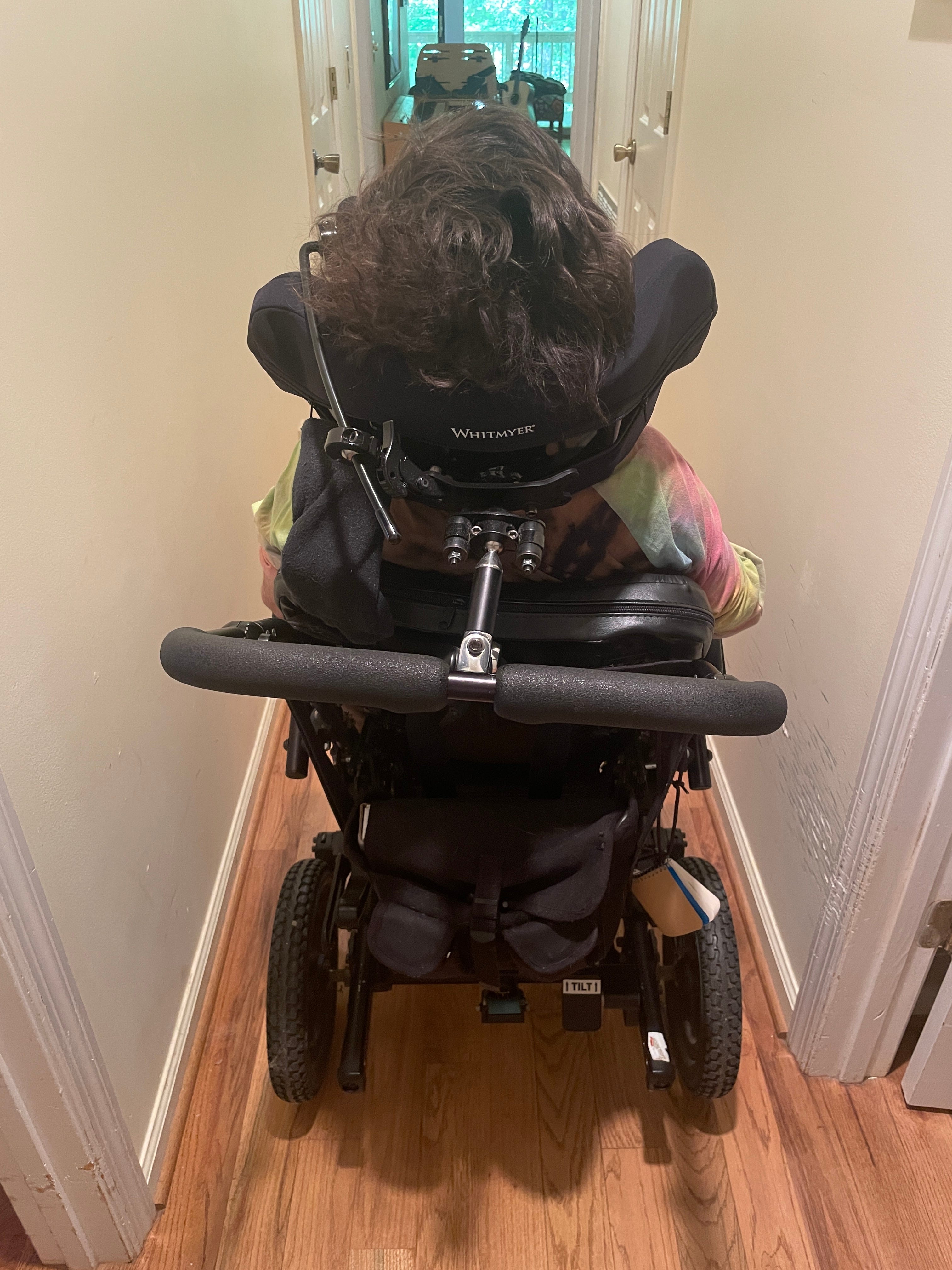
There are scars on my hall walls, scars from my son’s wheelchair, scars that feel less like damage and more like an ongoing conversation that doesn’t wait for closure.
Most metaphors about scars assume there is a kind of timeline: wound, healing, scar. A nice, clean arc. That isn’t what I’m talking about. These scars break the standard pattern.
These scars are not a finished story — they’re part of a living story that continues to ooze, a manuscript that keeps evolving. The hallway is a narrow passage where life presses itself into the surface over and over again, not because something is being wounded necessarily, but because life keeps happening.
There are days when it feels like we are living some version of Groundhog Day—the same morning, the same turns, the same careful navigation of space — the rhythm of routine repeats so precisely. But unlike the movie, nothing really resets. There is no clean slate waiting for us in the morning.
Instead, something accumulates. The marks on the wall make that undeniable.
Repetition is an illusion. What we are living in is less like a replay, and closer to a palimpsest — a surface written on again and again, where the previous marks are never fully erased. Daily passes down the hallway leave their marks. Each day writes over the last, not replacing it, but joining it.
The wall illustrates our past efforts, our present strains, and points to whatever might come next.
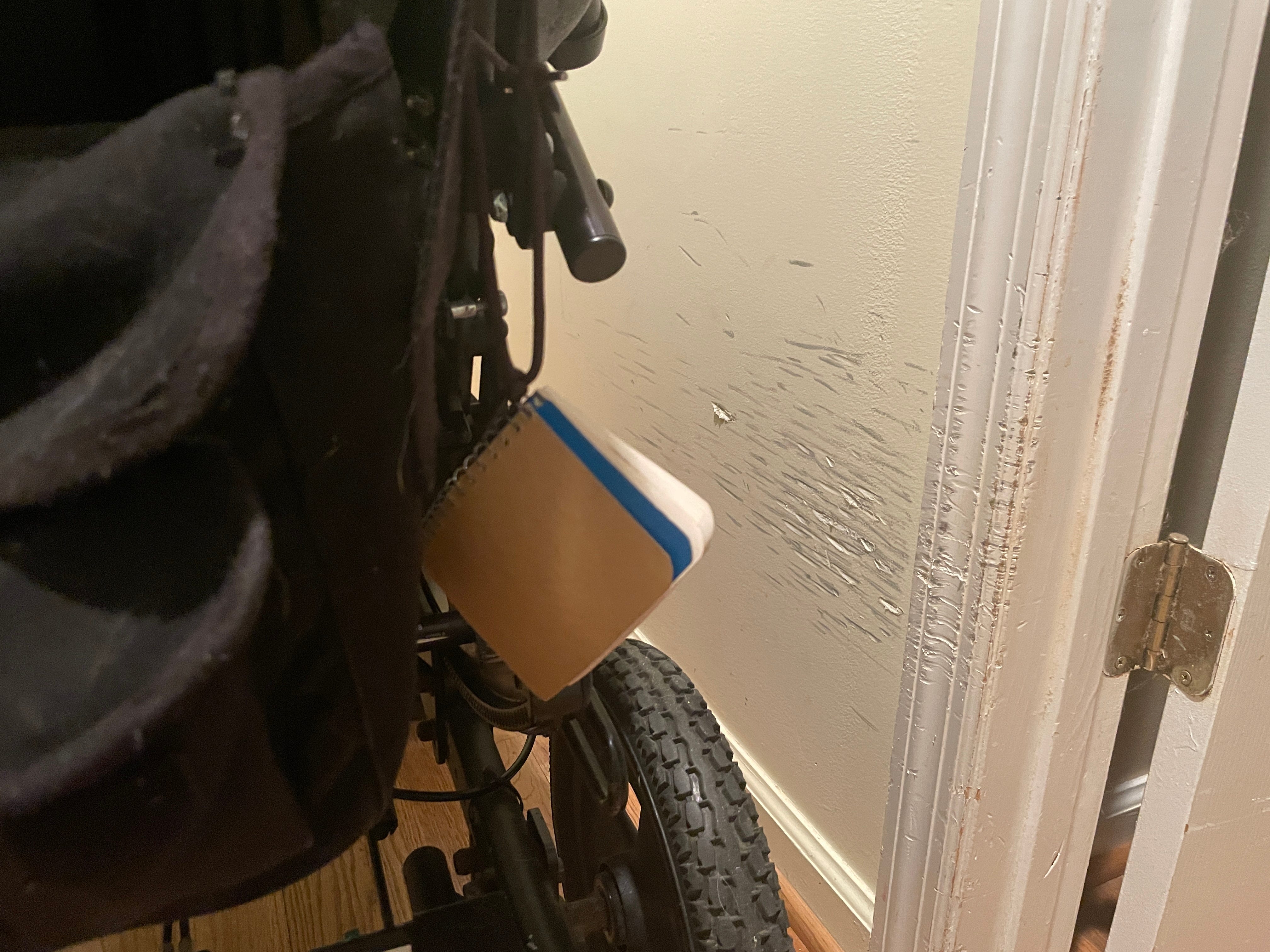
There’s honesty in those scuffs. They suggest that resilience is messy, cumulative, and ongoing. New marks join the old marks as we keep getting Joe up each morning and turning the corner outside of his room to see what lies ahead.
The wall is a record of passage, 25 years of navigation in a space that wasn’t built with my son’s needs in mind, but is being used anyway.
And there’s something amorphously architectural about it: the house adapting and absorbing, not through renovation, but through contact. Through friction. Through full-contact living. The wheelchair doesn’t just move through the hallway — it collides with it, embraces it, reshapes it, announcing its hard metallic presence.
The marks are evidence of insistence and persistence.
If traditional scars say, “this happened and I survived,” the scars in my house say something different: “this is still happening, and we are still here.”
There’s also a strange kind of intimacy in it. Those lines aren’t random — they trace repeated paths, familiar turns, daily routines. They are a map of care and consistency and effort. They map the geometry of my family’s life.
They tell a story not of house damage, but of contact, and even love. It’s love expressed as a constant negotiation of space, limitations, and movement. And sometimes it’s love unseen — because sometimes, when we wheelie the wheelchair and angle it in just the right way, we don’t hit the wall!
But those scars. When I stand back and look at my walls without judgement, but as something to read, those marks feel less like scars and more like a living archive of endurance.
I can look at those scars and remember how tired, how truly tired I am. Or, I can look at them as arrows, pointing the way to whatever comes next. Both work.